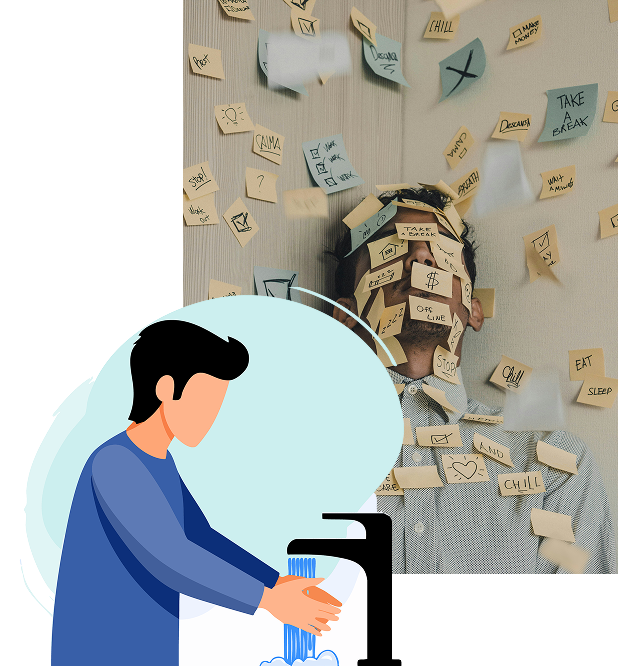
WHAT IS OCD?
Obsessive-compulsive disorder (OCD) is a mental health condition involving a cycle of:
- Obsessions – unwanted, intrusive thoughts, images, or urges that cause anxiety or distress.
- Compulsions – repetitive behaviors or mental acts a person feels driven to perform to reduce that anxiety or prevent something bad from happening.
People with OCD usually recognize that their fears or rituals don’t fully make sense, but they still feel an overwhelming urge to act on them.
Examples of obsessions
Someone with OCD might have recurring thoughts such as:
- "My hands are contaminated."
- "Did I leave the stove on?"
- "I might accidentally hurt someone."
- Intrusive violent, sexual, or blasphemous thoughts that are upsetting because they don't reflect the person's values or intentions.
Examples of compulsions
To relieve the anxiety, a person might:
- Wash their hands repeatedly.
- Check locks, appliances, or switches over and over.
- Count, repeat words, or pray in a specific way.
- Arrange objects until they feel "just right."
- Seek repeated reassurance from others.
The relief from a compulsion is usually temporary, so the cycle tends to repeat.
OCD is more than being neat
Many people say, “I’m so OCD,” when they like things organized. However, OCD is not simply being tidy or detail-oriented.
For example:
- Someone who likes a clean desk because they enjoy organization does not necessarily have OCD.
- Someone who spends hours cleaning because they're overwhelmed by fears of contamination, even though they know it's excessive, may have OCD.
What causes OCD?
Researchers don’t know the exact cause, but it likely involves a combination of:
- Genetics.
- Differences in how certain brain circuits function.
- Environmental factors that may contribute in some people.
It is not caused by a lack of willpower or a personality flaw.
Can it be treated?
Yes. OCD is often very treatable. The most effective treatments include:
- Cognitive behavioral therapy (CBT), especially a specialized approach called Exposure and Response Prevention (ERP).
- Medications called selective serotonin reuptake inhibitors (SSRIs) for some people.
With appropriate treatment, many people experience a substantial reduction in symptoms and are able to live full, productive lives.
One interesting point is that hoarding disorder was once considered a subtype of OCD, but it’s now recognized as its own diagnosis because many people with hoarding do not have the typical obsessions and compulsions seen in OCD, even though the conditions can occur together.